
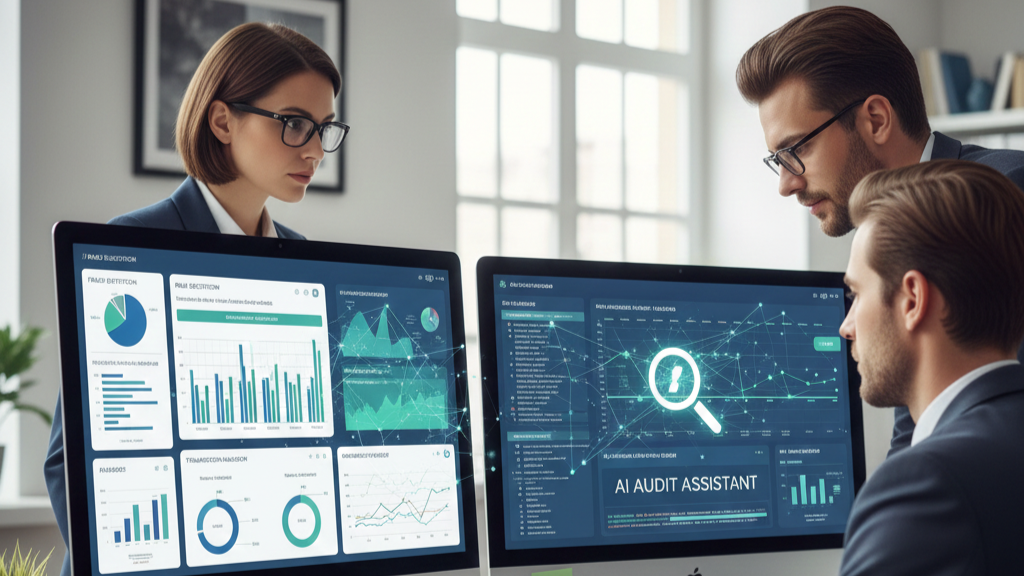
AI has begun to play a pivotal role in transforming traditional auditing methods into more modern and data-driven processes. An increasing number of audit firms are adopting AI-based tools to enhance the effectiveness of their audit practices. This technological transformation enables audits to be conducted more efficiently, particularly when dealing with large and complex data sets where traditional audit techniques may be insufficient or overly time-consuming.
Machine Learning (ML), a subset of AI, involves the development of computer programs that can “learn” from data in a manner similar to how humans learn from experience. In practice, ML models are trained on large volumes of data to identify relevant trends and patterns—much like how an accountant reviews multiple periods of financial data to detect anomalies or significant movements in financial statements.
Benefits of Applying Machine Learning in Auditing
01. Enhancing the Speed and Accuracy of Data Analysis
Applying ML in auditing enables the rapid and accurate analysis of extensive datasets. By learning from historical data, ML can identify patterns or trends that facilitate faster detection of anomalies and potential risk areas compared with traditional manual analysis. For instance, ML can analyze past data to predict which transactions are likely to contain errors or may require further verification.
02. Identifying Risks and Anomalies That Might Be Overlooked
ML is capable of detecting complex relationships and hidden patterns that may not be immediately apparent. In traditional audits, important findings might be missed or require significant time to uncover. ML allows auditors to promptly identify high-risk or unusual transactions, enabling more precise and targeted analyses. For example, ML can detect abnormal patterns or characteristics that are difficult to identify through manual methods.
03. Supporting the Audit of Large and Complex Data Sets
Modern financial data is increasingly voluminous and complex, and traditional auditing approaches may not effectively handle such complexity. ML assists auditors in processing massive datasets efficiently without the need to manually verify each transaction. For example, when dealing with more than one million records, Excel may be insufficient, whereas ML can process and analyze such data rapidly and accurately.
04. Reducing Delays in the Audit Process
Integrating ML into auditing helps reduce delays inherent in traditional audit methods that rely heavily on hypothesis generation and manual analysis. With ML, auditors can devote more time to in-depth analysis and complex decision-making, rather than spending excessive time on routine data processing.
Challenges and Considerations
Despite its strong potential, the application of ML in auditing presents several challenges. These include model complexity, limited technological understanding among practitioners, and concerns over data privacy. Auditors must therefore develop sufficient knowledge and technical competence to ensure that the implementation of ML delivers meaningful and reliable results.
One critical issue in using ML is the need for transparency and auditability principles that are fundamental to the auditing profession. Given that ML models can operate as complex and non-transparent systems, Auditors must carefully assess model reliability and accuracy, and be able to explain the logic, data sources, and model outputs before implementation. This is essential to maintain adherence to professional standards and preserve trust in financial information.
Furthermore, auditors should remain aware of potential risks arising from ML applications, such as the use of inappropriate training data or the introduction of bias in data processing, which may lead to unreliable conclusions. Continuous validation, testing, and refinement of ML models are therefore necessary to ensure analytical accuracy and reliability.
Conclusion
The application of Machine Learning in auditing significantly enhances both accuracy and efficiency, enabling auditors to manage large and complex datasets more effectively. It also facilitates the early identification of audit risks and supports timely audit planning, thereby modernizing and strengthening the audit function.
Going forward, auditing is expected to increasingly integrate technological innovations to add greater value and credibility to financial information. Auditors must continuously adapt and develop technological competencies to effectively respond to these changes while upholding the professional standards of the audit profession.
Source
- TFAC Newsletter (Issue 14, April 2025)
- “Machine Learning and Substantive Analytical Procedure in Financial Audit” — Pakorn Kotepuchai & Yachai Limpiyakorn
Author
Mr. Pakorn Kotepuchai
Working Group on IT Promotion for Auditing,
under the Auditing Profession Committee, TFAC