
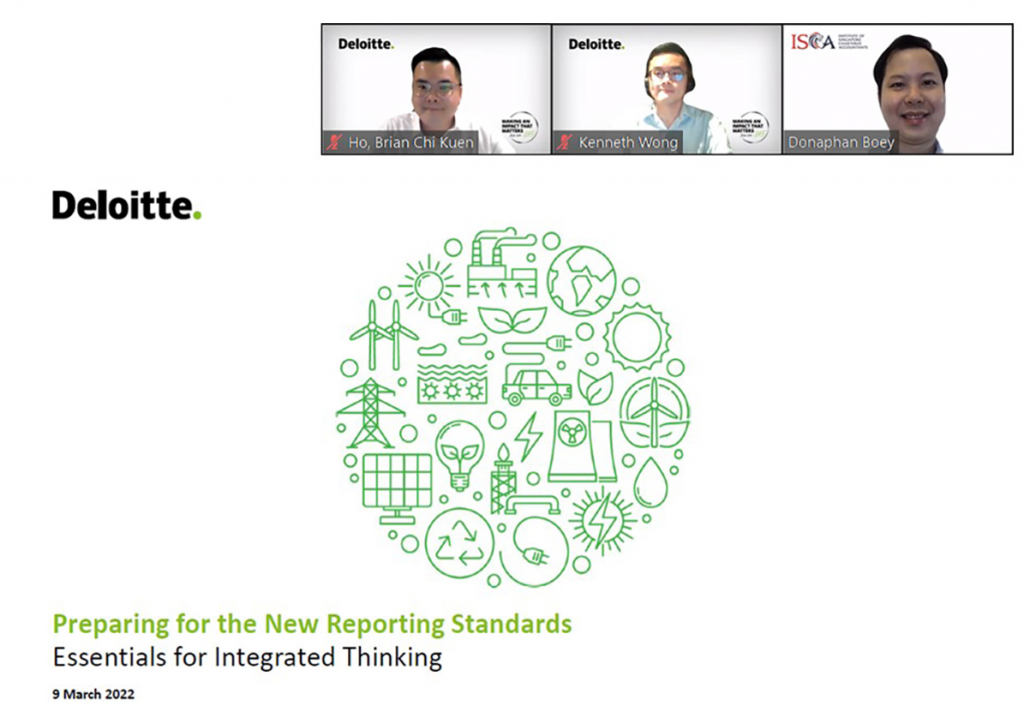
- Investors have rising expectations on how ESG performance is presented and communicated, and are becoming increasingly proactive in asking for greater action and enhanced ESG disclosures.
- Regulators have put in place more mandatory requirements for ESG disclosure but the outcome of these are inconsistency and lack of comparable information, largely because different countries have different national agendas and therefore different scopes of coverage.
- As a result, standard-setters are now rapidly accelerating towards developing a comprehensive, standardised reporting system.
Currently, there are various types of reporting frameworks in the market and ESG disclosure remains largely voluntary in most countries. Answering the call for a more standardised global framework for ESG disclosure and assurance, the International Sustainability Standards Board (ISSB) has been formed to set the IFRS Sustainability Disclosure Standards, expected to be released by the end of 2022, which will give impetus for local jurisdictions to adopt these standards and make ESG disclosure mandatory.

To prepare for the new ESG reporting standards and to effectively connect financial data and ESG disclosure for a more holistic and meaningful engagement with shareholders and regulators, organisations need to change the way they work, and embrace integrated thinking. Mr Ho explained the 4Ps of integrated thinking that should be embedded into an organisation’s governance, strategy, risk management, and metrics and targets.

Integrated thinking can help an organisation bring together its different business functions – for example, Finance, Sustainability, Operations, Talent and Supply Chain – in order to do business better, generate revenue and create value. Integrated thinking does not consider just one part of the business; it is about ensuring that every role in the business is part of the ESG ecosystem.
Concluding the session, Mr Ho touched on how climate-related risks could have potential implications on the organisation and the financial statements. For instance, investors have specifically identified climate-related risks as being increasingly important in their decision making, and the organisation itself may be affected by climate change in regard to its supply chain, customers, financing, insurance, and laws and regulations.
Included within ESG are climate-related matters that may create risks or opportunities for the organisation’s business. Climate change may affect organisations across various industries. Organisations will do well to consider the different physical and transition risks and opportunities, so that they can effectively disclose the potential financial impact of climate change on their businesses, strategies and financial planning at a time when investors are looking for consistency between climate commitments made by the organisations and the assertions in their annual report and financial statements.
By Nil (Singapore)